Church Schönwalde-Glien

Churches
0 Ratings of 5 (0)
0
0
0
0
0
How did you like your stay? You have already rated your stay.
Churches
From €
Show availability & price

p.P. = per person, p.P./N = per person / night, p.E./N = per unit / night, EZ = Single room, DZ = double room, FeWo = holiday home, App. = apartment, Suite = suite, FR = Breakfast, HP = half board, VP = full board
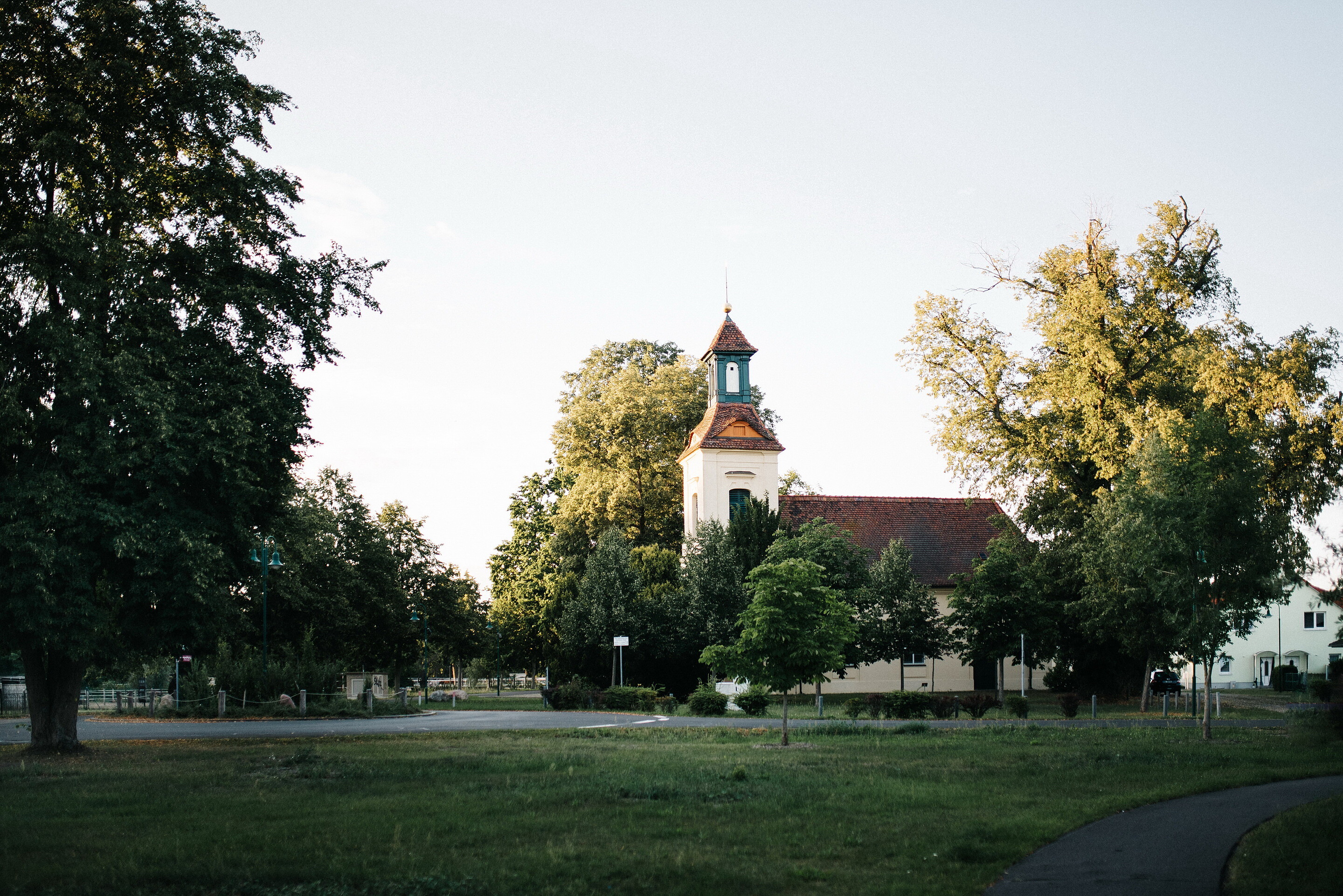
The village church of Schönwalde-Glien, located in the district of Schönwalde-Dorf, is a significant historical building in the Havelland region and a striking example of Baroque church architecture. It was built in 1737 in the Baroque style using rendered brick and was consecrated over 285 years ago—a time when the Kingdom of Prussia under Frederick William I was exerting formative influence.
Continue readingcollapse
The simple yet dignified hall church, with a three-sided east end and a square west tower with a lantern, is a characteristic architectural monument of the 18th century and is now a listed building. Inside, the church preserves an open, horseshoe-shaped gallery from the time of construction and a historic organ by Joachim Wagner from 1739, which is played both during services and concerts.

Another special feature is the rose pulpit altar in the so-called “farmers’ Baroque” style, a donation from the von Rosey family, who also initiated the church’s construction. Hanging above the central aisle is a twelve-arm chandelier bearing dates from the time of the Wars of Liberation—a quiet reference to the turbulent history the building has witnessed.

The village church of Schönwalde-Glien is not only a place of worship, but also a cultural center of the village: it opens its doors for events, guided tours, and concerts, inviting visitors to experience history, architecture, and music. Nestled in the historic village, surrounded by half-timbered houses and old alleys, it offers an authentic insight into the religious and architectural heritage of the region.
Continue readingcollapse
The village church of Schönwalde-Glien, located in the district of Schönwalde-Dorf, is a significant historical building in the Havelland region and a striking example of Baroque church architecture. It was built in 1737 in the Baroque style using rendered brick and was consecrated over 285 years ago—a time when the Kingdom of Prussia under Frederick William I was exerting formative influence.
Continue readingcollapse
The simple yet dignified hall church, with a three-sided east end and a square west tower with a lantern, is a characteristic architectural monument of the 18th century and is now a listed building. Inside, the church preserves an open, horseshoe-shaped gallery from the time of construction and a historic organ by Joachim Wagner from 1739, which is played both during services and concerts.

Another special feature is the rose pulpit altar in the so-called “farmers’ Baroque” style, a donation from the von Rosey family, who also initiated the church’s construction. Hanging above the central aisle is a twelve-arm chandelier bearing dates from the time of the Wars of Liberation—a quiet reference to the turbulent history the building has witnessed.

The village church of Schönwalde-Glien is not only a place of worship, but also a cultural center of the village: it opens its doors for events, guided tours, and concerts, inviting visitors to experience history, architecture, and music. Nestled in the historic village, surrounded by half-timbered houses and old alleys, it offers an authentic insight into the religious and architectural heritage of the region.
Continue readingcollapse

Arrival planner

Dorfstraße 36

14621 Schönwalde-Glien

Weather Today, 2. 8.

30 -10

  • Monday
    15 30
  • Tuesday
    20 35

Tourist information

Tourismusverband Havelland e.V.

Theodor-Fontane-Straße 10
14641 Nauen OT Ribbeck

Tel.: +49 (0) 33237-859030
Fax: +49 (0) 33237-859040

Weather Today, 2. 8.

30 -10

  • Monday
    15 30
  • Tuesday
    20 35

All information, times and prices are regularly checked and updated. Nevertheless, we can not guarantee the accuracy of the data. We recommend that you inquire about the current status by phone / e-mail or via the provider's website before your visit.